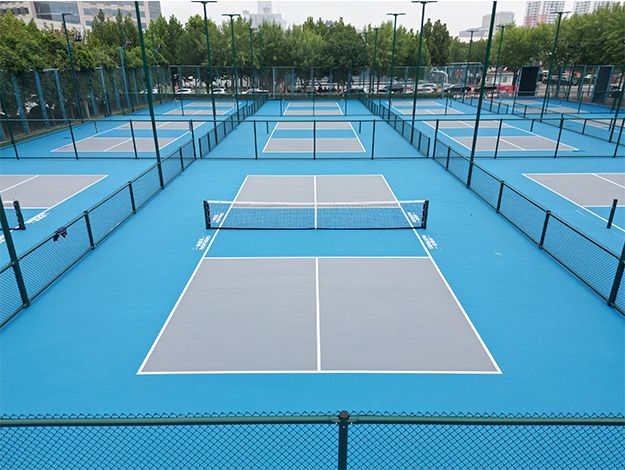
Basketball court lighting is not only about making the court bright. A good lighting design should help players clearly see the ball, reduce glare, improve safety, support spectators’ viewing experience, and lower long-term operating costs. Whether the court is used for school training, community recreation, commercial sports venues, indoor gyms, or professional competitions, the lighting system should be planned according to court size, illuminance level, mounting height, beam angle, uniformity, and environmental conditions.
Traditional halogen and metal halide lights have been used on basketball courts for many years, but they often consume more electricity, require frequent maintenance, and lose brightness over time. LED basketball court lighting has become a more efficient solution because it offers high brightness, better energy savings, longer service life, and more flexible optical control.
This guide explains how to design basketball court lighting for outdoor and indoor courts, including lux requirements, anti-glare design, pole layout, fixture wattage, installation height, and key LED lighting specifications.

1. Outdoor Basketball Court Lighting Design
Outdoor basketball courts are commonly used in schools, parks, residential communities, sports centers, and commercial recreation areas. Compared with indoor courts, outdoor lighting must handle rain, dust, temperature changes, wind load, and possible voltage fluctuations. Therefore, durability and safety are very important when selecting LED floodlights for outdoor basketball courts.
Surge Protection and IP Rating
Outdoor LED basketball court lights should include reliable surge protection. Sudden voltage spikes can damage LED drivers, reduce fixture life, or even cause lighting failure during a game. For outdoor venues, surge protection is especially important because lighting poles and power lines may be exposed to thunderstorms and unstable electrical conditions.
The fixture’s IP rating is another key factor. Since outdoor lights are exposed to rain, dust, and moisture, an IP65 or higher waterproof rating is recommended. For harsh climates, coastal areas, or large commercial projects, IP66 fixtures can provide better protection and longer-term reliability.
Lux Level for Outdoor Basketball Courts
Lux level refers to the amount of light received on the court surface. Different applications require different illuminance levels.
For recreational or community basketball courts, around 200 lux is often sufficient for casual play and basic visibility. For school courts, training courts, or commercial sports courts, 300–500 lux is more suitable. For high-level competitions or televised events, much higher illuminance may be required, often reaching 750 lux, 1000 lux, or even above 2000 lux depending on broadcasting requirements.
When calculating lighting demand, the court size must be considered. A standard basketball court is 28 meters long and 15 meters wide, while many outdoor courts include additional safety zones around the playing area. The larger the illuminated area, the more total lumens are required.
Lighting Uniformity
Brightness alone is not enough. A basketball court should also have good lighting uniformity. If some areas are too bright and others are too dark, players may struggle to judge ball movement, distance, and speed. Uneven lighting can also create shadows and affect the overall playing experience.
For recreational courts, moderate uniformity is usually acceptable. For training and competition courts, a higher uniformity ratio is recommended. Professional lighting design should consider average illuminance, minimum illuminance, maximum illuminance, horizontal illuminance, and vertical illuminance.
Flicker-Free Lighting
For courts used in video recording, live streaming, or professional broadcasting, flicker-free LED lighting is essential. Low-quality lights may look normal to the human eye but show flicker or stripes on high-speed cameras. This affects video quality and may reduce the professional appearance of the venue.
For broadcast-level basketball courts, lighting should support high-speed camera recording and maintain a low flicker rate. High-quality drivers and stable current control are important for this type of application.
Anti-Glare Design
Glare is one of the most common problems in basketball court lighting. Strong light shining directly into players’ eyes can affect shooting, passing, defense, and overall comfort. Spectators may also feel uncomfortable if lights are poorly aimed.
To reduce glare, lighting fixtures should be installed at the correct height and angle. Wide beam angles, asymmetric light distribution, glare shields, and precise aiming can help direct light onto the court instead of into the eyes of players and viewers. Avoid placing poles directly behind baskets or at positions that interfere with players’ line of sight.
2. Indoor Basketball Court Lighting Design
Indoor basketball court lighting has different requirements from outdoor lighting. Since indoor courts often have reflective floors, walls, and ceilings, glare control becomes especially important. The lighting system should provide bright, even illumination without creating harsh reflections on polished wooden or synthetic sports flooring.
For indoor gyms, LED high bay lights, linear sports lights, or specialized indoor court lights are commonly used. Fixtures can be mounted on the ceiling, arranged on both sides, or combined in a mixed layout depending on the building structure.
Recommended indoor lux levels may include:
| Application | Recommended Illuminance |
|---|
| Recreational training | 300 lux |
| School or regular competition | 500 lux |
| Professional competition | 750 lux or higher |
| Broadcast-level events | 1000–2000 lux or higher |
Color temperature and CRI should also be considered. A color temperature of 4000K to 6000K is commonly used for sports lighting. Higher CRI lighting helps players, referees, and spectators see colors more naturally, especially for uniforms, boundary lines, and the ball.
3. Basketball Court Lighting Cost
The cost of basketball court lighting depends on several factors, including court size, target lux level, fixture wattage, pole height, number of lights, installation method, control system, and electricity price.
Although LED basketball court lights may have a higher initial cost than traditional lighting, they usually reduce long-term expenses because of lower power consumption and reduced maintenance. For example, replacing metal halide lights with LED fixtures can significantly reduce electricity usage while maintaining or improving brightness.
Operating cost can be estimated with this formula:
Power consumption in kW × operating hours × electricity rate = electricity cost
For example, if a court uses 7000W of LED lighting, the total power is 7kW. If the electricity rate is $0.12 per kWh, one hour of operation costs:
7kW × $0.12 = $0.84 per hour
If the lights operate 8 hours per day:
$0.84 × 8 = $6.72 per day
Actual costs will vary depending on local electricity rates and usage time, but LED lighting generally provides better long-term savings compared with traditional lighting systems.
4. Why Choose LED Lights for Basketball Courts?
LED sports lighting has become the preferred option for many basketball courts because it offers better energy efficiency, longer lifespan, improved optical control, and easier maintenance.
Energy Saving
LED lights provide high lumen output with lower power consumption. Compared with metal halide or halogen lights, LED fixtures can often reduce energy costs by 50% or more while maintaining strong brightness. This is especially valuable for courts that operate every evening or for commercial sports venues with long daily operating hours.
Long Service Life
High-quality LED basketball court lights can operate for tens of thousands of hours. This reduces the frequency of lamp replacement and lowers maintenance costs, especially for fixtures installed on high poles or high gym ceilings. A longer service life is particularly useful for schools, sports centers, and public facilities that want stable lighting with minimal maintenance.
Better Heat Dissipation
Heat management directly affects LED performance and lifespan. A good basketball court light should have an effective heat sink system, usually made with die-cast aluminum or finned aluminum housing. Efficient heat dissipation helps reduce lumen depreciation, protect the LED chips and driver, and maintain stable brightness over time.
High Color Rendering
Color rendering index, or CRI, measures how accurately a light source shows the true colors of objects. For basketball courts, good CRI helps players and spectators clearly identify the ball, uniforms, court lines, and surrounding objects. For general courts, CRI 70 or 80 may be acceptable. For professional venues and broadcast applications, CRI 90 or above is often preferred.
Dimming and Smart Control
LED lighting can be combined with dimming systems, motion sensors, timers, and smart controls. This allows venue operators to adjust brightness for different scenarios, such as training, competition, cleaning, or standby mode. Dimming also helps reduce energy use and extend fixture life.
Flexible Wattage Options
LED basketball court lights are available in a wide range of wattages, such as 100W, 150W, 200W, 300W, 500W, 1000W, and higher-power stadium lights. The right wattage should be selected according to court size, pole height, target lux level, beam angle, and lighting layout.
5. Basketball Court Light Pole Height and Layout
A standard basketball court measures 28 meters by 15 meters, but the total lighting area is usually larger when safety zones are included. Outdoor basketball court dimensions are often around 30 × 17 meters or 32 × 19 meters.
Recommended Pole Height
For outdoor basketball courts, light poles are commonly 6 to 8 meters high. For recreational courts, 6-meter poles may be sufficient. For larger courts, commercial courts, or competition-level lighting, 8-meter or higher poles may provide better light distribution and lower glare.
Pole height should be selected together with beam angle and fixture wattage. If the pole is too low, glare may increase. If the pole is too high without enough wattage, the court may not receive enough illuminance.
Professional Outdoor Layout
A professional lighting layout often uses six poles, with three poles installed along each long side of the court. The poles can be placed near the center line and near both ends, but they should avoid positions that cause direct glare to players.
This layout provides better uniformity and is suitable for school courts, commercial courts, clubs, and competition-level outdoor basketball courts.
Economical Outdoor Layout
For a more cost-effective solution, four poles can be installed symmetrically on both sides of the court. This layout is suitable for parks, residential communities, and recreational courts. The poles should be positioned far enough from the playing area to avoid safety risks but close enough to provide sufficient brightness.
Beam Angle Selection
Beam angle affects how light spreads across the court. For many outdoor basketball courts, a wide beam angle of 90° to 120° is suitable because the court width is limited and the lights are usually installed on both sides. Narrow beam angles may project light farther but can reduce coverage and create uneven brightness.
For higher poles or larger venues, asymmetric optics may be used to direct light more precisely onto the court while reducing spill light and glare.
Fixture Wattage Reference
For outdoor courts, common fixture wattages include 200W, 300W, 400W, and higher depending on the project. A recreational court may use 4 to 8 LED floodlights, while a more professional court may require 8 to 12 fixtures or more. The final quantity should be confirmed by photometric simulation rather than estimated only by wattage.
6. Indoor Basketball Court Lighting Layout
Indoor lighting layout depends on ceiling height, court size, roof structure, and target lux level.
Ceiling-Mounted Layout
Ceiling-mounted fixtures are commonly used in gyms and training halls. Lights are installed symmetrically above the court to provide direct illumination. This layout is simple and effective for many indoor basketball courts.
Side-Mounted Layout
Side-mounted lights are installed along both sides of the court, usually with asymmetric light distribution. This design can improve vertical illuminance and reduce direct glare when properly aimed. It is often used in competition venues and larger sports halls.
Mixed Layout
A mixed layout combines ceiling-mounted and side-mounted fixtures. This can improve both horizontal and vertical illuminance, reduce shadows, and create a more balanced lighting environment. It is suitable for high-standard indoor courts and multi-purpose sports facilities.
7. Key Factors Before Choosing Basketball Court Lights
Before purchasing basketball court lighting, consider the following points:
· Court type: outdoor, indoor, recreational, school, commercial, or professional
· Court size and total illuminated area
· Required lux level and uniformity
· Pole height or ceiling height
· Beam angle and light distribution
· Anti-glare performance
· IP rating and impact resistance
· Surge protection
· Flicker-free performance for video recording
· Color temperature and CRI
· Energy consumption and maintenance cost
· Installation method and future replacement convenience
For professional projects, a lighting simulation is recommended before installation. A simulation can show average lux, minimum lux, uniformity, glare risk, pole position, and fixture aiming angle. This helps avoid under-lighting, over-lighting, and unnecessary energy waste.
Conclusion
A good basketball court lighting design should provide enough brightness, even light distribution, low glare, safe installation, and efficient energy use. Outdoor courts need durable waterproof fixtures, proper pole layout, surge protection, and suitable beam angles. Indoor courts need glare control, good color rendering, and balanced illumination across the playing area.
LED basketball court lighting is a practical choice for modern sports facilities because it offers high efficiency, long service life, flexible control, and better lighting quality. Whether you are upgrading an old court or building a new venue, the best solution should be based on court size, usage level, installation height, lux requirement, and professional lighting design.
FAQ
What is the best lux level for a basketball court?
For recreational outdoor courts, around 200 lux may be enough. For training or school courts, 300–500 lux is recommended. For professional or televised games, 750 lux to 2000 lux or higher may be required.
How high should basketball court light poles be?
Outdoor basketball court light poles are commonly 6 to 8 meters high. Larger or higher-standard courts may need taller poles for better uniformity and glare control.
Are LED lights better than metal halide lights for basketball courts?
Yes, LED lights are generally more energy-efficient, longer-lasting, easier to control, and more suitable for modern sports lighting. They also reduce maintenance and operating costs over time.
What beam angle is suitable for basketball court lighting?
For many outdoor basketball courts, 90° to 120° beam angles are commonly used. For higher poles or professional layouts, asymmetric optics may provide better light control.
How many lights are needed for one basketball court?
The number of lights depends on court size, pole height, fixture wattage, beam angle, and required lux level. A small recreational court may need 4 to 8 lights, while a professional court may require 8 to 12 lights or more.
Why is anti-glare lighting important?
Glare can affect players’ vision, reduce comfort, and interfere with shooting and passing. Good anti-glare design improves safety, performance, and the overall playing experience.