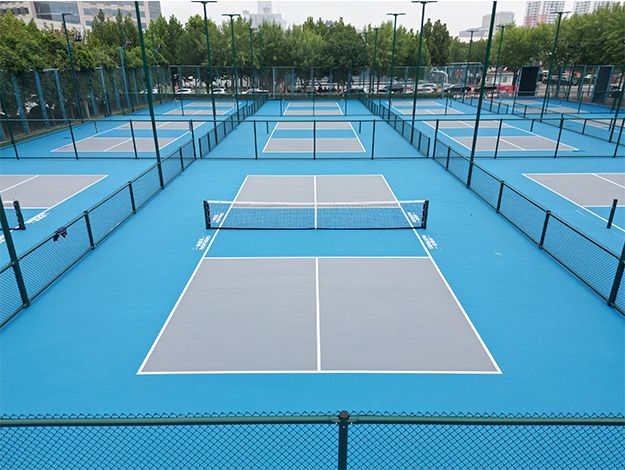
Playing tennis at night requires more than just skill—it demands a well-designed lighting system to ensure optimal performance and safety. High-quality tennis court flood lights significantly enhance visibility, enabling players to accurately track the ball and respond with precision. At the same time, proper illumination minimizes shadows and dark zones, reducing the risk of accidents on the court.
In addition to safety, advanced lighting solutions contribute to better concentration and overall gameplay. Uniform light distribution and low-glare design help maintain visual comfort, allowing players to stay focused during fast-paced rallies. Modern LED lighting systems, in particular, offer superior performance with consistent brightness, energy efficiency, and reduced glare, making them the preferred choice for professional and recreational tennis courts alike.
Key Takeaways
· Choose LED flood lights for superior energy efficiency, long service life, and reliable outdoor performance
· Ensure sufficient illumination levels (recommended ≥500 lux) for clear visibility during competitive play
· Prioritize uniform lighting to eliminate shadows and glare, improving player experience
· Select a color temperature of 5000K–6000K to simulate natural daylight and reduce eye fatigue
· Plan lighting layout based on court size and configuration for optimal coverage
· Use durable, weather-resistant fixtures with high IP ratings for long-term operation
· Follow proper installation and maintenance practices to maximize system efficiency and lifespan

Key Lighting Requirements for Tennis Courts
Brightness and Lumen Output
Brightness is a fundamental factor in tennis court lighting, directly impacting visibility and player performance during night matches. It is typically measured in lux (illuminance) and supported by the total lumen output of the lighting system. For competitive tennis courts, a minimum of 500 lux is recommended to ensure clear ball tracking and fast player response.
A well-designed lighting system must deliver sufficient lumen output to cover the entire playing area, including critical zones such as baselines and sidelines. Inconsistent brightness in these areas can negatively affect gameplay and safety.
Modern LED tennis court flood lights are widely preferred due to their high luminous efficacy, energy efficiency, and stable output, ensuring optimal brightness while reducing operational costs. Selecting the right lumen level helps create a professional-grade playing environment with enhanced visual clarity.
Uniformity and Glare Control
Uniform light distribution is essential for maintaining a consistent and distraction-free playing experience. Poor uniformity can result in shadows or over-illuminated spots, which interfere with depth perception and player focus. An effective lighting design uses strategically positioned fixtures to achieve balanced illumination across the entire court. This ensures that every area—from center court to outer boundaries—receives consistent light levels.
Equally important is glare control. Excessive glare can cause visual discomfort and reduce reaction time, especially during high-speed rallies. Advanced LED flood lighting systems incorporate anti-glare optics and precision beam angles to minimize light spill and glare. By optimizing both uniformity and glare control, you significantly improve visual comfort, gameplay quality, and overall user experience.
Color Temperature and Visual Comfort
Color temperature plays a key role in how players perceive the court, ball, and surroundings. Measured in Kelvin (K), it defines the tone and clarity of the light output. For tennis courts, a color temperature range of 5000K–6000K is considered optimal, as it closely simulates natural daylight. This daylight-like illumination enhances color rendering and contrast, allowing players to track the ball more accurately against different court surfaces. It also helps reduce eye fatigue, supporting longer playing sessions without discomfort.
LED lighting solutions offer consistent color performance with high CRI (Color Rendering Index), ensuring both visual accuracy and comfort. By selecting the appropriate color temperature, you can create a professional, visually balanced, and performance-driven lighting environment.
Factors to Consider When Choosing Tennis Court Flood Lights
Court Size and Layout
The size and layout of your tennis court directly determine the type and number of flood lights required. A standard doubles court measures 78 feet by 36 feet, but surrounding areas also need sufficient illumination for safety and visibility. Larger courts or courts with spectator zones may require more powerful lighting or additional fixtures.
Evaluate how light spreads across the court. A well-designed system minimizes shadows and provides uniform illumination. For smaller courts, fewer fixtures with wide beam angles may suffice, while larger courts often need multiple fixtures with narrower beam angles to achieve consistent brightness. Understanding your court’s dimensions and layout ensures the most effective lighting solution.
Pole Height and Placement
Pole height and placement significantly affect light quality. Poles that are too short can create shadows and uneven illumination, while excessively tall poles may cause light spillage and reduce efficiency. Typically, poles between 20 and 30 feet tall provide optimal coverage, distributing light evenly without generating glare.
Strategic placement is equally important. Most courts use four to six poles positioned around the perimeter, often at corners and midpoints of the court’s length to ensure balanced illumination. Avoid positioning poles directly behind baselines, as this can create glare for players. Proper pole height and placement enhance visibility and improve the overall playing experience.
Energy Efficiency and Cost
Energy efficiency is a critical consideration when selecting tennis court flood lights. LED flood lights are the most efficient option, offering high lumen output while consuming less power. Although their initial cost may be higher, their long lifespan and reduced energy consumption deliver substantial long-term savings.
Consider both upfront investment and ongoing expenses. Energy-efficient lights lower electricity bills and maintenance costs. Some LED fixtures include motion sensors, further optimizing energy usage by activating lights only when the court is in use. Selecting energy-efficient lighting not only reduces costs but also promotes sustainable practices.
Durability and Weather Resistance
Durability is essential for outdoor lighting systems exposed to rain, wind, extreme temperatures, and other environmental challenges. High-quality materials, such as aluminum or stainless steel, ensure fixtures resist corrosion and maintain structural integrity over time. Weather resistance is equally critical. Look for lights with an IP65 rating or higher, guaranteeing protection against dust and water. A higher IP rating is especially important in regions with heavy rain or snow.
To maximize durability, choose fixtures with robust housing, tempered glass covers, and UV-resistant coatings. These features protect internal components from physical damage, stray tennis balls, debris, and sun exposure. Investing in durable, weather-resistant flood lights reduces maintenance and replacement costs while ensuring consistent performance and a safe, well-lit environment for night play.
Types of Tennis Court Flood Lights and Their Features
LED Flood Lights
LED flood lights are the preferred choice for tennis court illumination due to their superior performance and energy efficiency. They provide a broad, powerful beam that ensures uniform lighting across the entire court, minimizing shadows and enhancing visibility for players during night games. In addition to delivering high-quality lighting, LED lights are energy-efficient, reducing electricity costs and supporting environmentally friendly practices.
Durability is another key advantage of LED flood lights. Designed for outdoor use, they withstand harsh weather conditions, including rain, wind, and extreme temperatures. Many fixtures offer advanced features such as motion sensors, dimmable settings, and swivel mounts, allowing customizable lighting configurations. With a long lifespan and low maintenance requirements, LED flood lights provide a reliable, hassle-free solution for tennis courts.
Beam Angles and Light Distribution
The beam angle of a flood light determines how the light spreads across the court. Wide beam angles are ideal for smaller courts or setups with fewer fixtures, covering larger areas efficiently. Narrow beam angles concentrate light on specific zones, delivering higher brightness where it’s most needed. Selecting the appropriate beam angle depends on your court’s size, layout, and intended usage.
Proper light distribution is critical for a uniform playing environment. Uneven lighting can create dark spots or overly bright areas, disrupting gameplay. LED flood lights, with their advanced optics, excel at providing consistent illumination. By combining the right beam angles with strategic fixture placement, you can achieve balanced lighting that enhances both performance and safety.
Mounting Options
Mounting choices significantly impact lighting quality. The height and positioning of fixtures determine how evenly the court is illuminated and help control glare. Common mounting options include pole-mounted lights, wall-mounted fixtures, and adjustable brackets. Pole-mounted lights are the most widely used for tennis courts, as they provide elevated illumination and even coverage.
Adjustable brackets and swivel mounts allow you to fine-tune light direction, focusing illumination on the court while minimizing spillover into surrounding areas. This not only improves energy efficiency but also reduces light pollution. Choosing the right mounting option ensures optimal lighting performance, creating a safe and visually comfortable environment for night play.
Compliance with Standards and Regulations
Lighting Classes for Tennis Courts
Tennis court lighting must comply with established standards to ensure optimal visibility and safety. The International Tennis Federation (ITF) classifies court lighting into three main classes based on play level and court purpose:
· Class I: For professional and competitive matches, requiring the highest illumination. Courts must provide at least 500 lux of uniform lighting to ensure excellent visibility for players and spectators.
· Class II: Suitable for club-level and recreational matches, with moderate lighting levels, typically around 300 lux, sufficient for casual play.
· Class III: Intended for training and non-competitive use, with the lowest lighting requirements, approximately 200 lux, ideal for practice sessions and informal games.
Understanding these classes helps in selecting appropriate flood lights. LED flood lights are particularly effective in meeting these standards due to their high lumen output and uniform light distribution, ensuring both compliance and enhanced playing experience.
Local and International Regulations
Adhering to local and international regulations is essential when installing tennis court lighting. These rules ensure safety, environmental compliance, and optimal performance. Key considerations include:
· Light Pollution Control: Many regions enforce guidelines to minimize light spillage. Using fixtures with adjustable brackets or swivel mounts directs light precisely onto the court, reducing surrounding light pollution while improving energy efficiency.
· Energy Efficiency Standards: Governments encourage energy-efficient solutions. LED flood lights consume significantly less power than traditional metal halide lamps and offer long lifespans, making them environmentally friendly and cost-effective.
· Safety Standards: Outdoor fixtures must withstand harsh weather conditions. High IP-rated lights (IP65 or above) protect against dust and water, ensuring reliable operation and regulatory compliance.
· Illumination Uniformity: Even light distribution is often mandated to avoid shadows or bright spots that disrupt gameplay. LED fixtures with advanced optics provide consistent illumination to meet these standards effectively.
By following these standards and regulations, you create a safe, functional, and regulation-compliant tennis court while avoiding potential legal issues. Consulting with lighting experts or manufacturers can help identify the most suitable solutions for your court.
Tips for Installation and Maintenance
Installation Best Practices
Proper installation is crucial to ensure tennis court flood lights perform efficiently, provide uniform illumination, and have a long lifespan. Following these best practices helps you avoid common installation issues and achieve optimal results.
Plan the Layout Carefully
Design a lighting layout that ensures even coverage across the court. Typically, use four to six poles positioned strategically around the perimeter. Place poles at corners and midpoints of the court’s length to minimize shadows and maximize coverage. Avoid positioning poles directly behind baselines, as this can cause glare for players.
Choose the Right Pole Height
Select poles between 20 and 30 feet tall. This height range ensures balanced light distribution without excessive spillage. Taller poles often require narrower beam angles, while shorter poles work better with wider beams.
Secure the Fixtures Properly
Mount flood lights using adjustable brackets or swivel mounts to direct light precisely onto the court. Angle the fixtures correctly to maintain uniform brightness and minimize light pollution in surrounding areas.
Follow Electrical Safety Standards
Hire a licensed electrician for wiring and connections. Use weatherproof cables and connectors to protect the system from moisture and environmental damage. Ensure the installation complies with local electrical codes and safety regulations.
Test the Lighting System
After installation, conduct nighttime testing to evaluate uniformity, brightness, and glare. Adjust fixture angles or positions as needed. Testing ensures the lighting system meets the required standards for both playability and safety.
Maintenance and Upkeep
Regular maintenance is essential to keep tennis court flood lights performing at their best and to extend their lifespan. A well-maintained system ensures consistent illumination and reduces the risk of unexpected failures.
Inspect Fixtures Periodically
Conduct routine inspections to detect signs of wear or damage. Check for loose brackets, cracked lenses, or corroded components, and address any issues promptly to prevent further deterioration.
Clean the Lights Regularly
Accumulated dirt and debris can reduce brightness and efficiency. Clean lenses and housings with a soft cloth and mild detergent, avoiding abrasive materials that could scratch the surface.
Check for Weather Damage
Outdoor fixtures are exposed to harsh weather. After storms or heavy rain, inspect the lights to ensure seals and gaskets remain intact, protecting internal components from water ingress.
Replace Faulty Components
Replace damaged or malfunctioning parts, such as bulbs or drivers, immediately. Use compatible components to maintain performance. For LED flood lights, consider upgrading to newer models with enhanced features when replacements are needed.
Monitor Energy Efficiency
Track energy consumption regularly. A sudden increase in electricity usage may indicate a problem with fixtures or wiring. Address such issues promptly to optimize efficiency and reduce costs.
Schedule Professional Maintenance
Hire a professional lighting technician for annual maintenance checks. They can evaluate the system’s overall condition, perform necessary repairs, and ensure compliance with safety standards.
By following proper installation and maintenance practices, you can create a reliable and efficient lighting system for your tennis court. Regular care not only enhances the playing experience but also protects your investment over the long term.
Selecting the best tennis court flood lights requires careful consideration of several key factors. Prioritize brightness, uniformity, and color temperature to ensure optimal visibility and player comfort. Equally important are energy efficiency and durability, which provide long-term cost savings and consistent performance. Finally, adhering to industry standards and regulations ensures safety while delivering an enhanced, professional-level playing experience.