-
Products
About Uphos – Your Trusted Sports Facility Equipment Manufacturer
Established in 1998 and headquartered at the Guangzhou Liandong U valley, with a 50,000 sqm factory in Yunfu, Uphos Sports Co., Ltd. is a leading stadium equipment manufacturer specializing in integrated sports facility solutions.
Core Expertise & Product
Pioneer in PE-coated wire mesh fencing for sports venues—first to introduce it commercially in China.
Flagship product lines include:
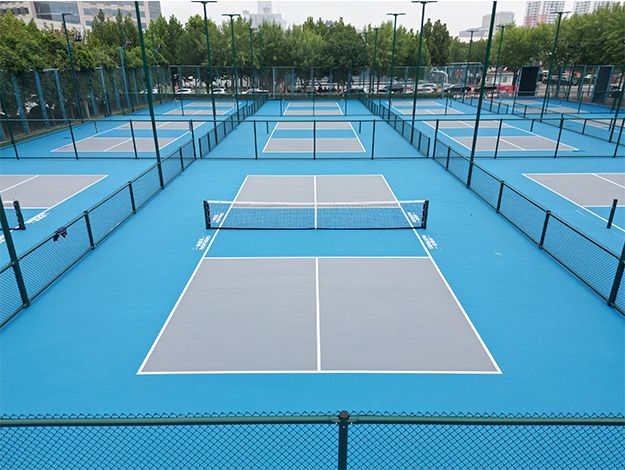
· Court Fencing & Enclosures (tennis, football, basketball, pickleball, multi-sport courts)
· Sports Lighting Systems (LED floodlights with anti-glare lens and heat‑sink design)
· Umpire & Player Chairs, courtside benches, tea‑tables
· Mobile Grandstands, court dividers, windscreen nets, squeegees, ball carts, goal nets, and more
Event Credentials & Global Reach
Supplied stadium-grade equipment for major international events including Beijing 2008 Olympic Games (tennis, hockey, baseball), 2010 Guangzhou Asian Games, 2011 Shenzhen Universiade, WTA Singapore Finals, Australian Open, Miami Open, Indian Wells Masters, Rogers Cup, Shanghai Masters, and China Open.
Over 70 global partners, serving 35+ high‑profile tournaments and venues around the world.
Quality Assurance & Patents
Holds 30+ patents in sports facility components and designs.
Certified by ISO 9001, SGS, ITF, NSCC, and other global institutions, ensuring product standards for competition-level stadium equipment.
Why Choose Uphos' Sports Facility Equipment
· Proven OEM customization capability across fencing, seating, lighting and accessories
· Strong event-track record with global sports federations and client testimonials
· Compliance with international standards for safety, durability, and performance
· Integrated solutions provider: from R&D to manufacturing to logistics support
string(2742) "<h2>About Uphos – Your Trusted Sports Facility Equipment Manufacturer</h2><p><br/></p><p>Established in 1998 and headquartered at the Guangzhou Liandong U valley, with a 50,000 sqm factory in Yunfu, Uphos Sports Co., Ltd. is a leading <a href="https://www.uphos.com/about-us/" target="_self"><strong>stadium equipment manufacturer</strong></a> specializing in integrated sports facility solutions.</p><p><br/></p><h2>Core Expertise & Product</h2><p><br/></p><p>Pioneer in PE-coated wire mesh fencing for sports venues—first to introduce it commercially in China.</p><p><br/></p><p>Flagship product lines include:</p><p><br/></p><p><strong>· </strong>Court Fencing & Enclosures (tennis, football, basketball, pickleball, multi-sport courts)</p><p><strong style="text-wrap-mode: wrap;">· </strong>Sports Lighting Systems (LED floodlights with anti-glare lens and heat‑sink design)</p><p><strong style="text-wrap-mode: wrap;">· </strong>Umpire & Player Chairs, courtside benches, tea‑tables</p><p><strong style="text-wrap-mode: wrap;">· </strong>Mobile Grandstands, court dividers, windscreen nets, squeegees, ball carts, goal nets, and more</p><p><br/></p><h2>Event Credentials & Global Reach</h2><p><br/></p><p>Supplied <a href="https://www.uphos.com/sport-courts-equipment/" target="_self"><strong>stadium-grade equipment</strong></a> for major international events including Beijing 2008 Olympic Games (tennis, hockey, baseball), 2010 Guangzhou Asian Games, 2011 Shenzhen Universiade, WTA Singapore Finals, Australian Open, Miami Open, Indian Wells Masters, Rogers Cup, Shanghai Masters, and China Open.</p><p><br/></p><p>Over 70 global partners, serving 35+ high‑profile tournaments and venues around the world.</p><p><br/></p><h2>Quality Assurance & Patents</h2><p><br/></p><p>Holds 30+ patents in sports facility components and designs.</p><p>Certified by ISO 9001, SGS, ITF, NSCC, and other global institutions, ensuring product standards for competition-level stadium equipment.</p><p><br/></p><h2>Why Choose Uphos' Sports Facility Equipment</h2><p><br/></p><p><strong style="text-wrap-mode: wrap;">· </strong>Proven OEM customization capability across fencing, seating, lighting and accessories</p><p><strong style="text-wrap-mode: wrap;">· </strong>Strong event-track record with global sports federations and client testimonials</p><p><strong style="text-wrap-mode: wrap;">· </strong>Compliance with international standards for safety, durability, and performance</p><p><strong style="text-wrap-mode: wrap;">· </strong>Integrated solutions provider: from R&D to manufacturing to logistics support</p>"
View All Products - Customization
- Case
- Video
- Manufacturing & Quality
- About Us
- News